


Ice Makers Market Forecast 2025–2035 | Types Compared | End-Use Applications | Regional Breakdown | March 2026 | Source: MRFR Ice Makers Market Report
| Key Takeaways
• Global market valued at USD 2,725.5 billion in 2024 — projected to reach USD 4,304.45 billion by 2035. • CAGR of 4.2% from 2025–2035, driven by food service expansion, hospitality growth, and healthcare adoption. • Commercial segment dominates; IoT-enabled and energy-efficient smart ice makers are the fastest-growing product type. • Asia-Pacific leads growth — fuelled by café culture boom, hotel sector expansion, and rising urban incomes. • Hygiene regulations and self-cleaning technology are reshaping procurement standards across all end-use segments. |
Ice makers have quietly become critical infrastructure across hospitality, healthcare, food retail, and industrial sectors. The days of the simple ice bin are over — modern units are IoT-connected, self-cleaning, energy-certified, and purpose-built for everything from surgical suite cooling to craft cocktail bars. As food service expands globally and hygiene standards tighten, demand for reliable, high-performance ice production systems is accelerating across both commercial and emerging residential segments.
| Get the full data — free sample available:
→ Download Free Sample PDF — Ice Makers Market Report Includes market sizing, segmentation methodology, and regional forecast tables. |
Market size and forecast (2024–2035)
The global ice makers market was valued at USD 2,725.5 billion in 2024 and is projected to reach USD 4,304.45 billion by 2035 at a CAGR of 4.2%, per MRFR analysis. Growth is driven by food service sector modernisation, hospitality industry expansion in Asia-Pacific and the Middle East, and a shift toward smart, energy-efficient commercial units replacing legacy equipment across developed markets.
Types of ice makers — which one fits your operation?
Ice type, output volume, and footprint are the three variables that determine which unit fits a given application. Here is a direct comparison:
| Type | Ice Form | Best For | Key Feature | Trend |
| Modular / Cube | Full or half cube | Bars, restaurants, hotels | High-volume output, stackable | Dominant |
| Undercounter | Cube or nugget | Small bars, cafes, offices | Space-saving, self-contained | Growing |
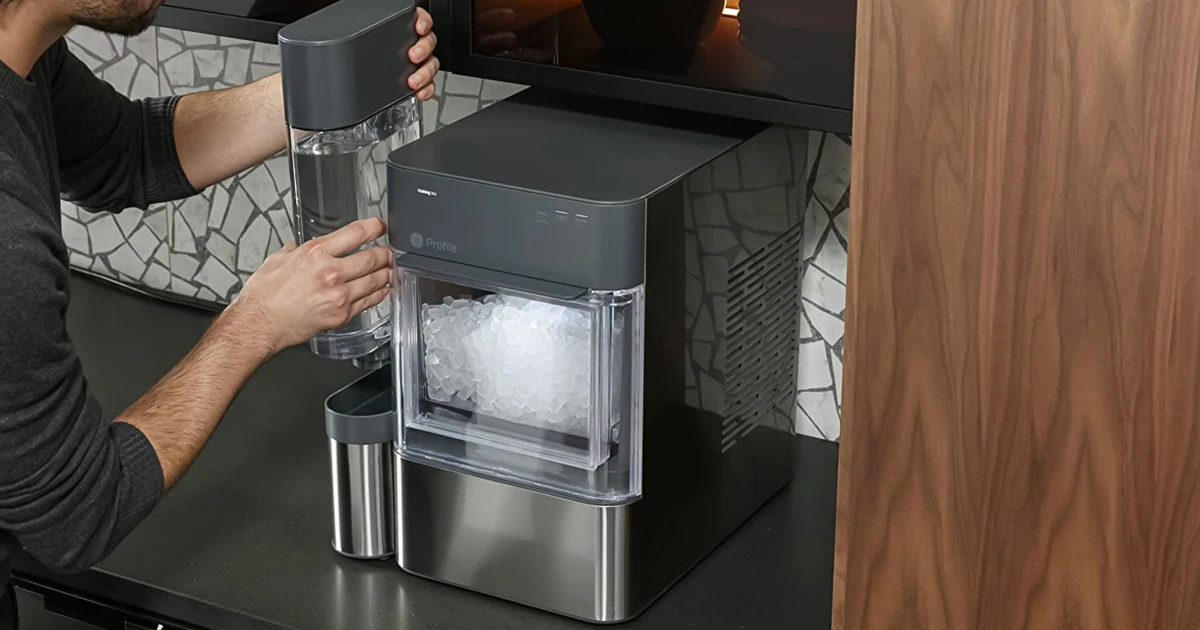
| Countertop | Nugget / pearl ice | Offices, healthcare, retail | Compact, portable, low maintenance | Fastest growing |
| Flake / Crushed | Flake or shaved | Seafood, pharma, healthcare | Optimal for product preservation | Stable |
| Industrial / Tube | Tube or block | Food processing, chemical labs | Continuous high-capacity production | Stable |
| Hybrid / Smart | Multiple ice types | Premium hotels, cloud kitchens | IoT monitoring, self-cleaning, Wi-Fi | Emerging |
Fastest-growing segment: Countertop and nugget ice makers are experiencing the sharpest growth curve — driven by healthcare adoption (nugget ice is preferred for patient hydration) and the premium home bar trend. IoT-enabled hybrid units are emerging as the flagship product tier for large commercial operators.
End-use applications and what buyers prioritize
Food service and hospitality dominate volume, but healthcare and industrial applications command higher unit value and stricter specification requirements:
| Segment | Primary Use Cases | Key Purchase Driver |
| Food Service & Restaurants | Beverages, food display, blended drinks, catering | Throughput capacity, hygiene certification, noise level |
| Hotels & Hospitality | Room service, minibar, event catering, poolside bars | Reliability, aesthetics, remote monitoring capability |
| Healthcare & Pharma | Medicine storage, laboratory cooling, patient care | Hygiene compliance, flake/nugget ice, antimicrobial surfaces |
| Retail & Supermarkets | Seafood display, cold produce, beverage chillers | Continuous output, energy efficiency, maintenance cost |
| Industrial / Food Processing | Batch cooling, fish packing, chemical temperature control | High-volume flake or tube ice, sanitary design |
| Residential | Home entertaining, home bars, countertop convenience | Compact size, quiet operation, ease of use |
What is driving ice maker demand?
- Food service expansion: Global restaurant, café, and QSR growth — particularly across Asia-Pacific — is the single largest demand driver. Every new commercial kitchen requires ice production capacity, and rising consumer expectations for chilled beverages are raising output requirements per outlet.
- Hygiene and food safety regulations: Stricter sanitation mandates (FDA, FSSAI, EU food safety directives) require ice produced and stored under certified hygienic conditions. This is accelerating replacement of legacy units with self-cleaning, antimicrobial, and HACCP-compliant models.
- Healthcare adoption: Hospitals and clinics increasingly use flake and nugget ice for patient therapy, medication storage, and specimen preservation. This segment demands pharmaceutical-grade hygiene standards and reliable continuous output.
- Smart and energy-efficient technology: IoT connectivity enabling remote diagnostics, predictive maintenance alerts, and energy usage monitoring is shifting procurement decisions — particularly for multi-site hospitality operators managing large ice maker fleets.
- Residential market growth: Premium countertop ice makers are gaining traction among home entertainers and home bar enthusiasts — a segment boosted by the post-pandemic increase in at-home dining and cocktail culture.
Regional market breakdown
Asia-Pacific leads growth in absolute volume; North America and Europe are upgrade-driven with strong demand for smart and sustainable models.
| Region | Maturity | Key Drivers | Outlook |
| North America | Mature | Established food service industry, smart appliance adoption | Steady; IoT and energy-efficient upgrade cycle |
| Europe | Mature | Premium hospitality, food safety standards, outdoor dining | Moderate; sustainability-driven procurement |
| Asia-Pacific | Rapidly growing | Café culture boom, hotel construction, rising urban incomes | Highest CAGR — India, China, SE Asia lead |
| Middle East & Africa | Expanding | Tourism investment, luxury hotels, high-temp climate demand | Strong; hospitality-driven growth |
| Latin America | Emerging | Restaurant sector growth, convenience store expansion | Moderate; cost-sensitive, rising awareness |
India spotlight: India’s ice maker market is expanding rapidly across three fronts — QSR and café chain rollouts in Tier 1 and 2 cities, hotel construction driven by rising domestic and international tourism, and healthcare infrastructure investment under Ayushman Bharat. The hot climate across most of India sustains year-round demand at levels well above global averages.
Competitive landscape
The ice makers market is led by established commercial appliance manufacturers including Manitowoc Foodservice, Hoshizaki, Scotsman Ice Systems, Ice-O-Matic, and Follett — all competing primarily on output efficiency, hygiene certification, and service network coverage. The residential and small-commercial segment is increasingly contested by brands such as GE Appliances, Frigidaire, and a wave of direct-to-consumer countertop unit makers. Competition is intensifying around IoT features, natural refrigerant compatibility (R290, R448A), and energy star certification as sustainability becomes a procurement criterion.
Outlook through 2035
Three forces will define the ice makers market through 2035: smart commercial units with predictive maintenance becoming the hospitality industry default, healthcare-grade hygiene standards spreading from medical to food service procurement, and Asia-Pacific volume growth sustaining overall market expansion. Manufacturers investing in natural refrigerants, self-sanitising technology, and cloud-connected fleet management will capture the highest-value segments of the next decade.
| Access complete forecasts, type segmentation & competitive intelligence:
→ Purchase the Full Ice Makers Market Report (2025–2035) 10-year forecasts | Type & application segmentation | Regional data | Competitive landscape | 150+ pages |
Related market reports
- Industrial Automation Control Systems Market
- Industrial Racking Systems Market
- Safety Instrumented Systems Market
- Pneumatic Tube System Market
- Wire Rope Sling Market
- Infrared IR Sensing & Imaging Market
- Browse All MRFR Reports
Market data sourced from Market Research Future (MRFR). Published March 2026. For custom research enquiries, contact MRFR here.